Kalyanis of Karnataka
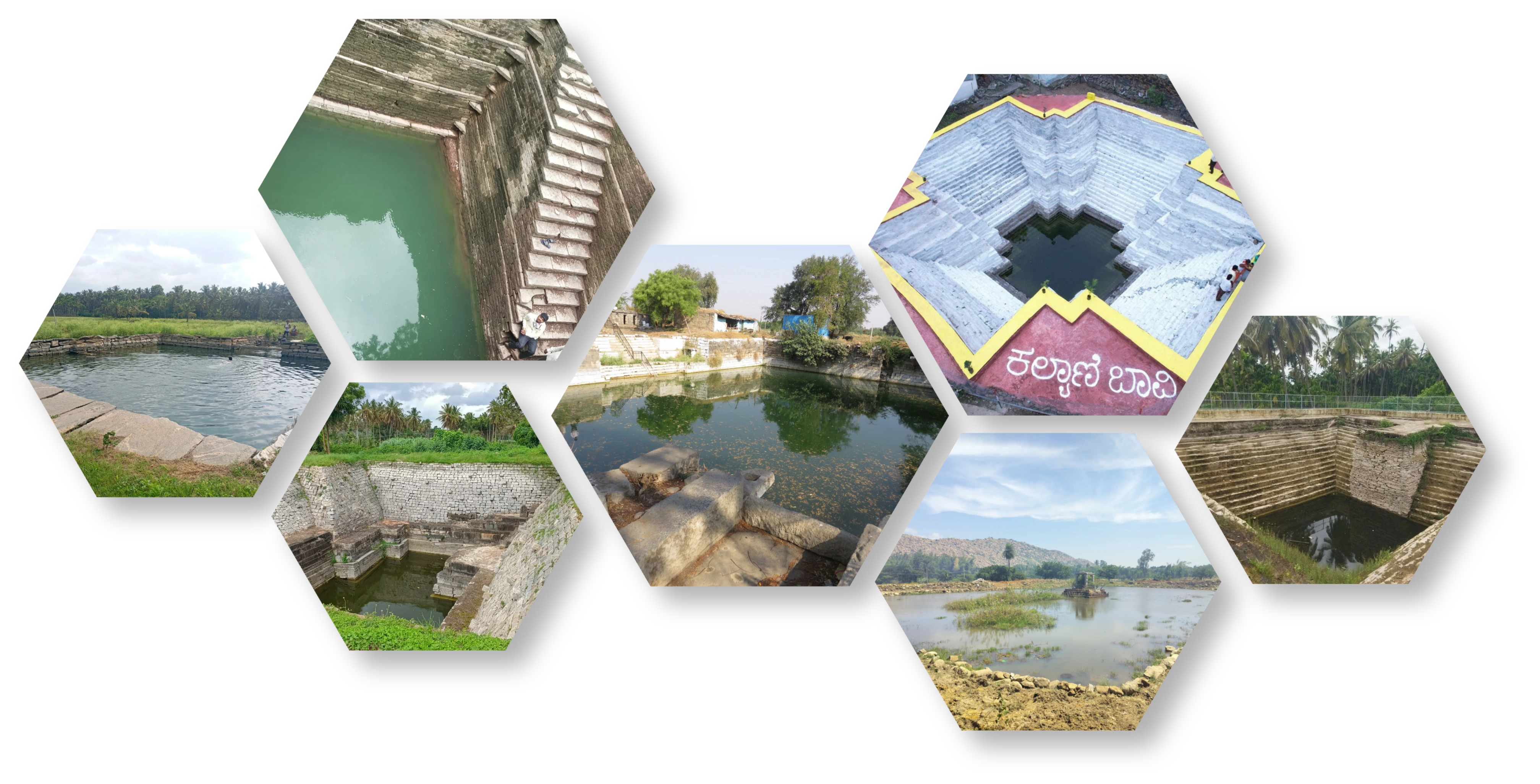
Kalyanis formed the heart of community water systems across Karnataka. Beyond their practical role in storing water, they were places where culture, ecology, and social life converged. Often designed with remarkable architectural ingenuity, Kalyanis maximise water storage while creating spaces for ritual, daily use, and social gathering, embodying the idea of a true water commons. They reflect a culture that valued water not only as a resource, but as a shared inheritance to be respected, maintained, and equitably accessed.
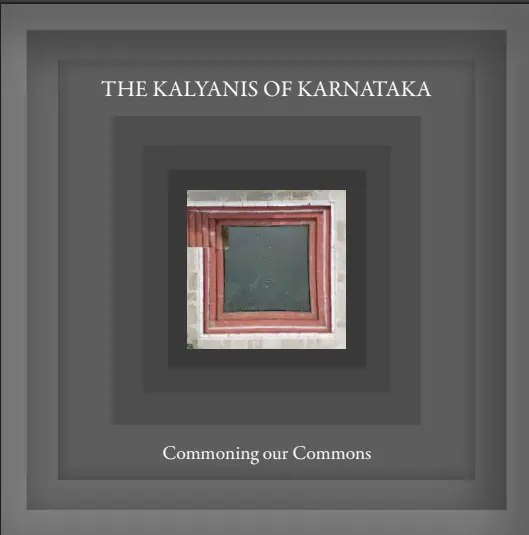
Journey through the rich socio-cultural history of Karnataka's stepwells,
brought to life through images and stories in
Kalyanis of Karnataka: Commoning our Commons
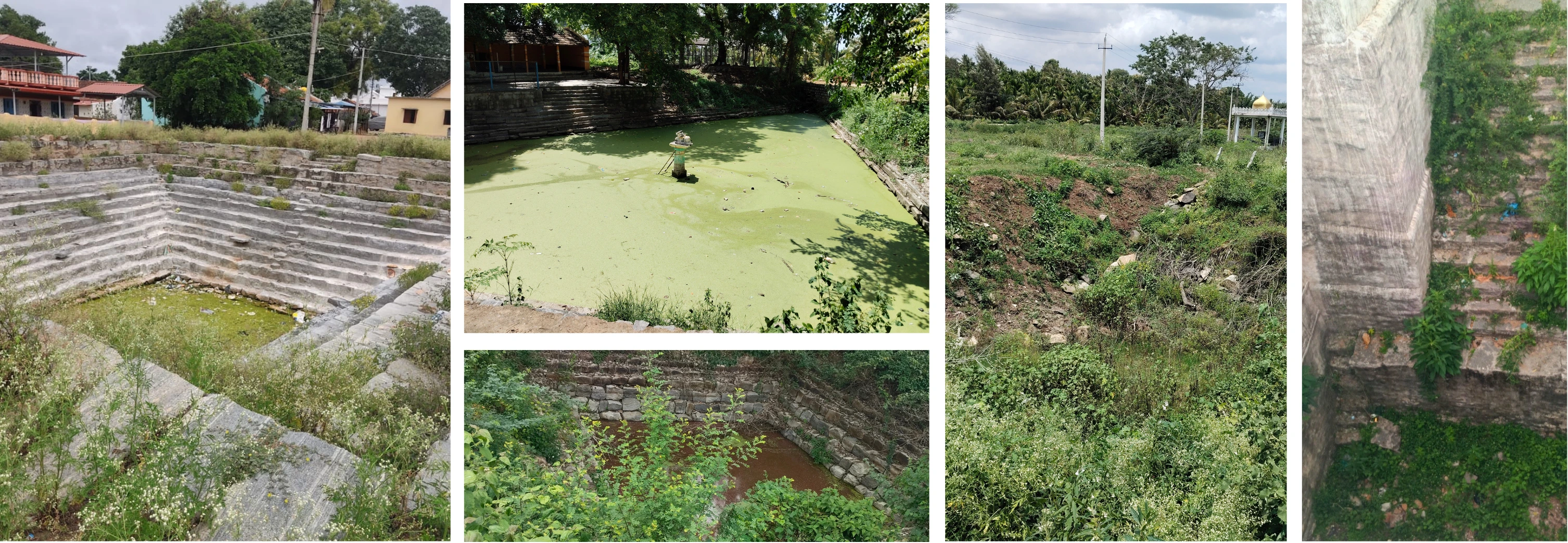
Today, this legacy stands at a critical juncture. While some Kalyanis continue to function and serve their communities, many face degradation in terms of silting, encroachment, groundwater depletion, and neglect. Once perennial tanks are drying, aquifers are under stress, and the impacts are visible in declining water security, agriculture, and livelihoods. These are not isolated challenges; they signal a broader ecological imbalance that demands urgent, collective action.
District-wide Stepwell Restoration Campaign
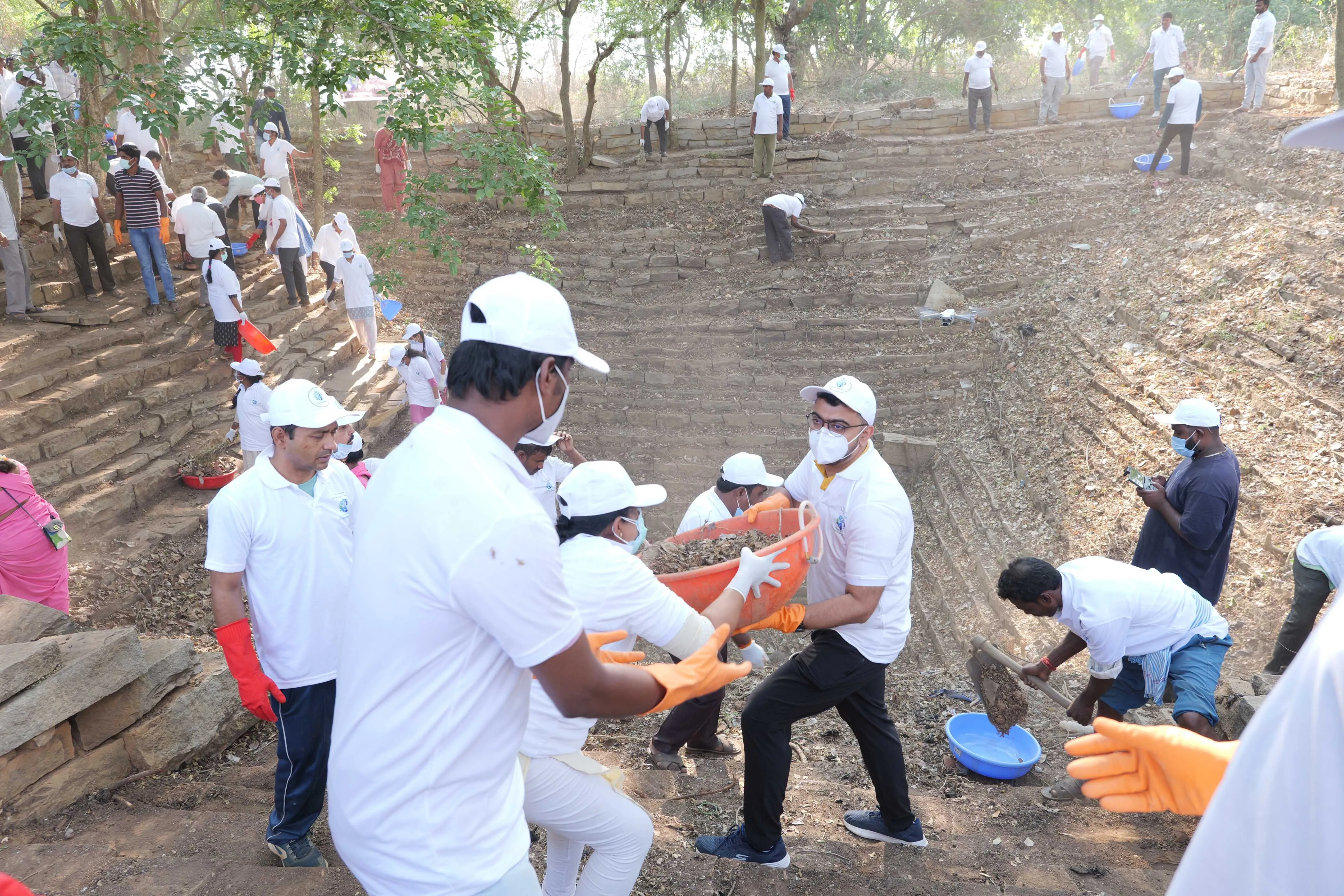
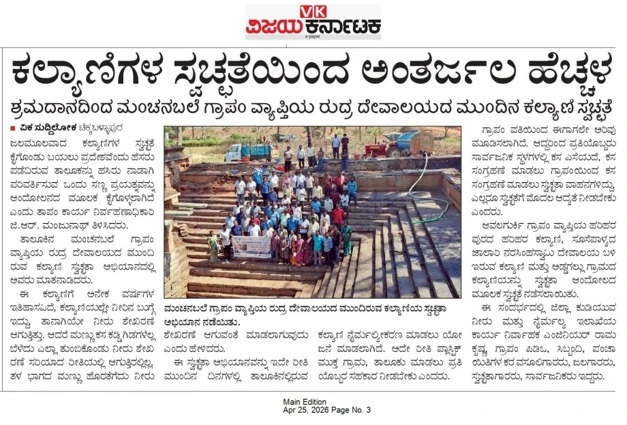
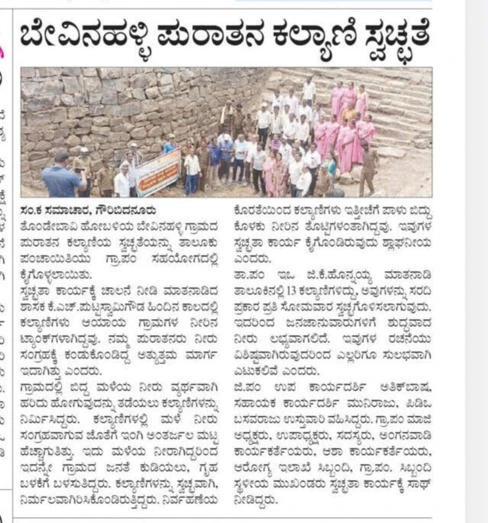
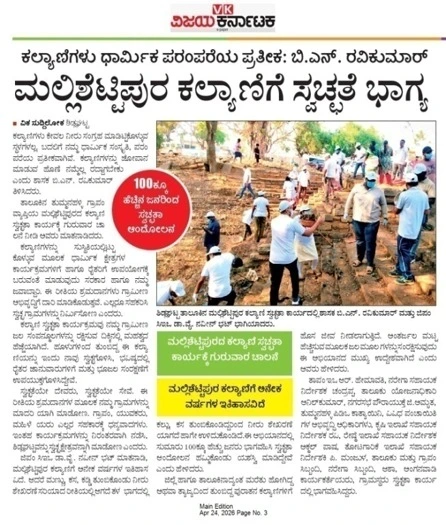
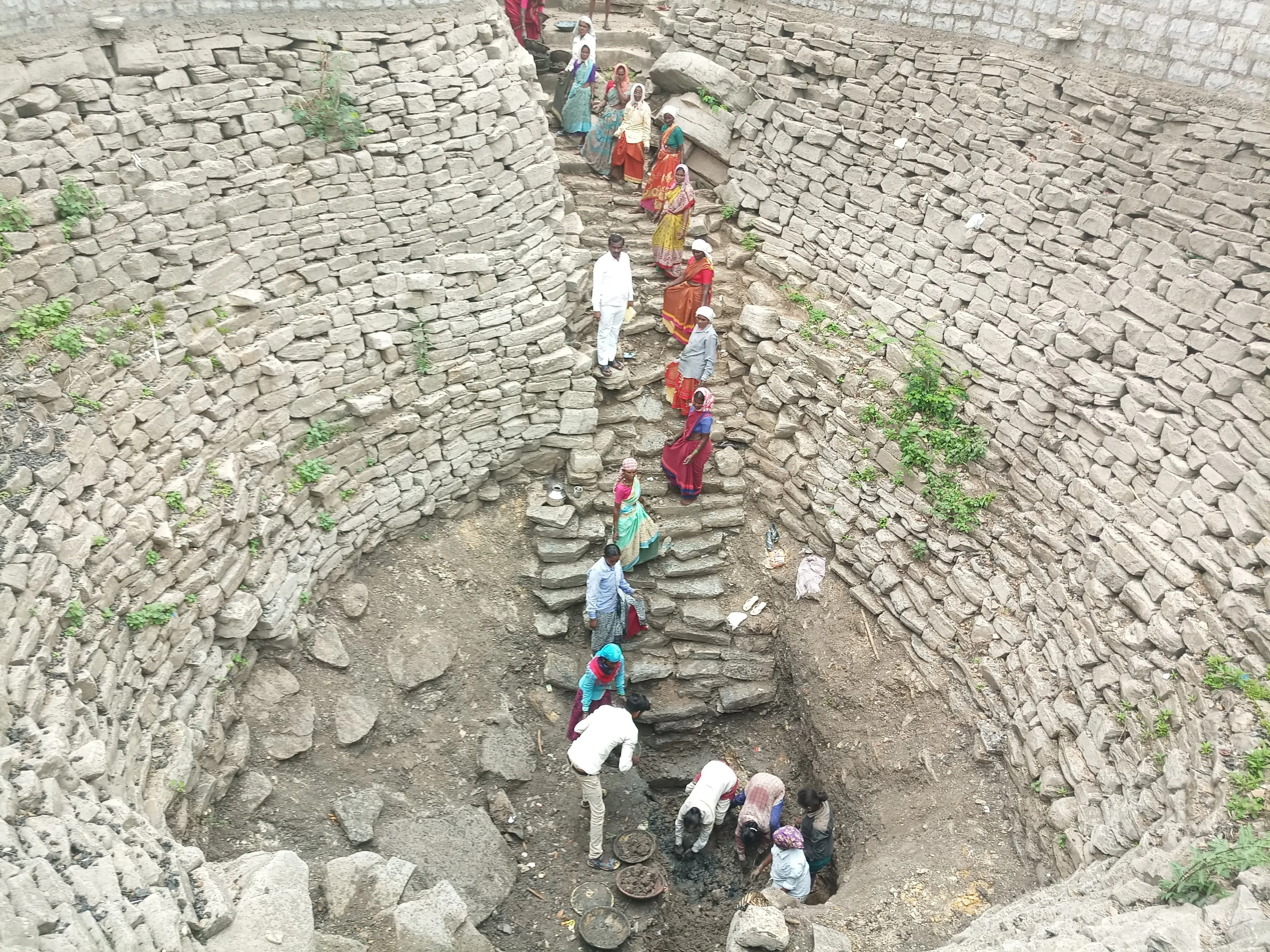
Ahead of the 2026 monsoon, this special campaign was carried out under the leadership of the Zilla Panchayat, Chikkaballapura, with the active participation of all Gram Panchayats, Taluk Panchayats, various departments under the Rural Development and Panchayat Raj (RDPR) Department, youth organizations, environmental enthusiasts, NSS/NCC volunteers, and local communities. Through this collective effort, 181 ancient Kalyanis (traditional stepwells) across the district were cleaned and restored by Shramadaana, significantly enhancing their water-holding capacity and revitalising these traditional water sources. This was conducted across 6 weeks and involved participation of Ministers, MLA’s.
The weekly restoration drives conducted across all taluks of the district demonstrated how community participation can strengthen climate resilience, support ecological restoration, and improve public health. The campaign also made a significant contribution towards building a more water-secure and sustainable future.
Reviving stepwells, one story at a time.
Encouragingly, the revival, restoration, and community stewardship of Kalyanis in Karnataka have gained momentum in recent years under state water policy and village-level planning. As a state-wide campaign takes shape, an increasing number of Kalyanis are being taken up for restoration through public schemes, NGO initiatives, and private partnerships across both rural and urban contexts.
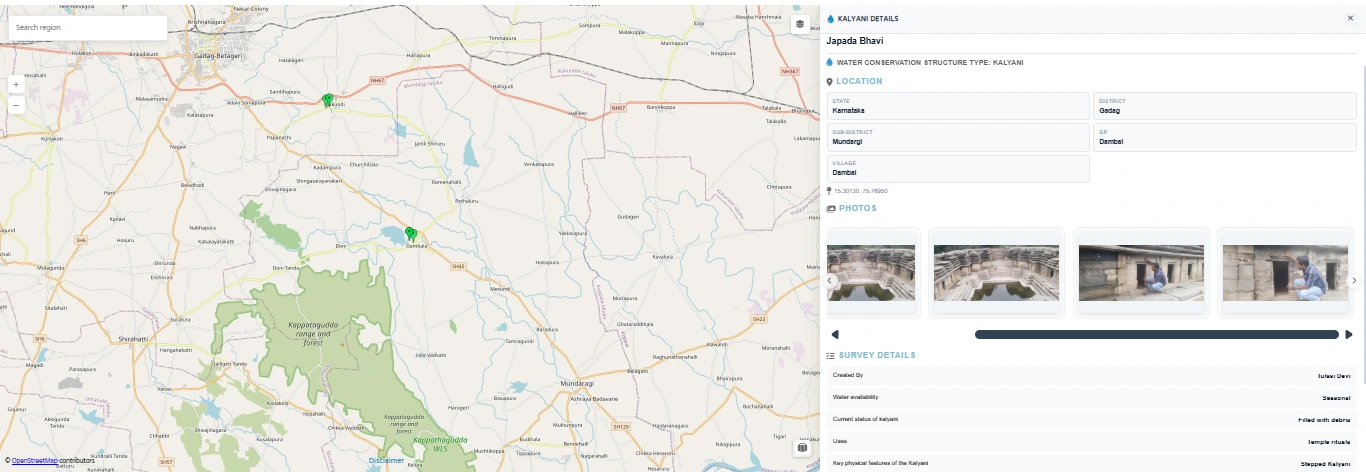
The Stepwells of India Portal is another step in this direction. This comprehensive GIS-based platform is designed as a citizen science initiative to map and document the present status of Kalyanis. It seeks to enable community action and policy engagement for their restoration and long-term stewardship. While it begins with Kalyanis, the platform is designed to evolve into a dynamic knowledge resource, mapping a wide range of water harvesting structures across regions.
You as a resource user can contribute to this repository of information by uploading photographs, documents, and information about a Kalyani in your neighbourhood. Each entry helps support awareness, conservation, and restoration.
Kalyani film
Protecting our water commons is about securing our water futures.
Come be part of this initiative!
Kalyanis formed the heart of community water systems across Karnataka. Beyond their practical role in storing water, they were places where culture, ecology, and social life converged. Often designed with remarkable architectural ingenuity, Kalyanis maximise water storage while creating spaces for ritual, daily use, and social gathering, embodying the idea of a true water commons. They reflect a culture that valued water not only as a resource, but as a shared inheritance to be respected, maintained, and equitably accessed.
Journey through the rich socio-cultural history of Karnataka's stepwells, brought to life through images and stories in
Kalyanis of Karnataka: Commoning our CommonsToday, this legacy stands at a critical juncture. While some Kalyanis continue to function and serve their communities, many face degradation in terms of silting, encroachment, groundwater depletion, and neglect. Once perennial tanks are drying, aquifers are under stress, and the impacts are visible in declining water security, agriculture, and livelihoods. These are not isolated challenges; they signal a broader ecological imbalance that demands urgent, collective action.
District-wide Stepwell Restoration Campaign
Ahead of the 2026 monsoon, this special campaign was carried out under the leadership of the Zilla Panchayat, Chikkaballapura, with the active participation of all Gram Panchayats, Taluk Panchayats, various departments under the Rural Development and Panchayat Raj (RDPR) Department, youth organizations, environmental enthusiasts, NSS/NCC volunteers, and local communities. Through this collective effort, 181 ancient Kalyanis (traditional stepwells) across the district were cleaned and restored by Shramadaana, significantly enhancing their water-holding capacity and revitalising these traditional water sources. This was conducted across 6 weeks and involved participation of Ministers, MLA’s.
The weekly restoration drives conducted across all taluks of the district demonstrated how community participation can strengthen climate resilience, support ecological restoration, and improve public health. The campaign also made a significant contribution towards building a more water-secure and sustainable future.

Reviving stepwells, one story at a time.
Encouragingly, the revival, restoration, and community stewardship of Kalyanis in Karnataka have gained momentum in recent years under state water policy and village-level planning. As a state-wide campaign takes shape, an increasing number of Kalyanis are being taken up for restoration through public schemes, NGO initiatives, and private partnerships across both rural and urban contexts.
The Stepwells of India Portal is another step in this direction. This comprehensive GIS-based platform is designed as a citizen science initiative to map and document the present status of Kalyanis. It seeks to enable community action and policy engagement for their restoration and long-term stewardship. While it begins with Kalyanis, the platform is designed to evolve into a dynamic knowledge resource, mapping a wide range of water harvesting structures across regions.
You as a resource user can contribute to this repository of information by uploading photographs, documents, and information about a Kalyani in your neighbourhood. Each entry helps support awareness, conservation, and restoration.
Kalyani film
Protecting our water commons is about securing our water futures.
Come be part of this initiative!